 IT
IT EN
EN ES
ES PT
PT FR
FR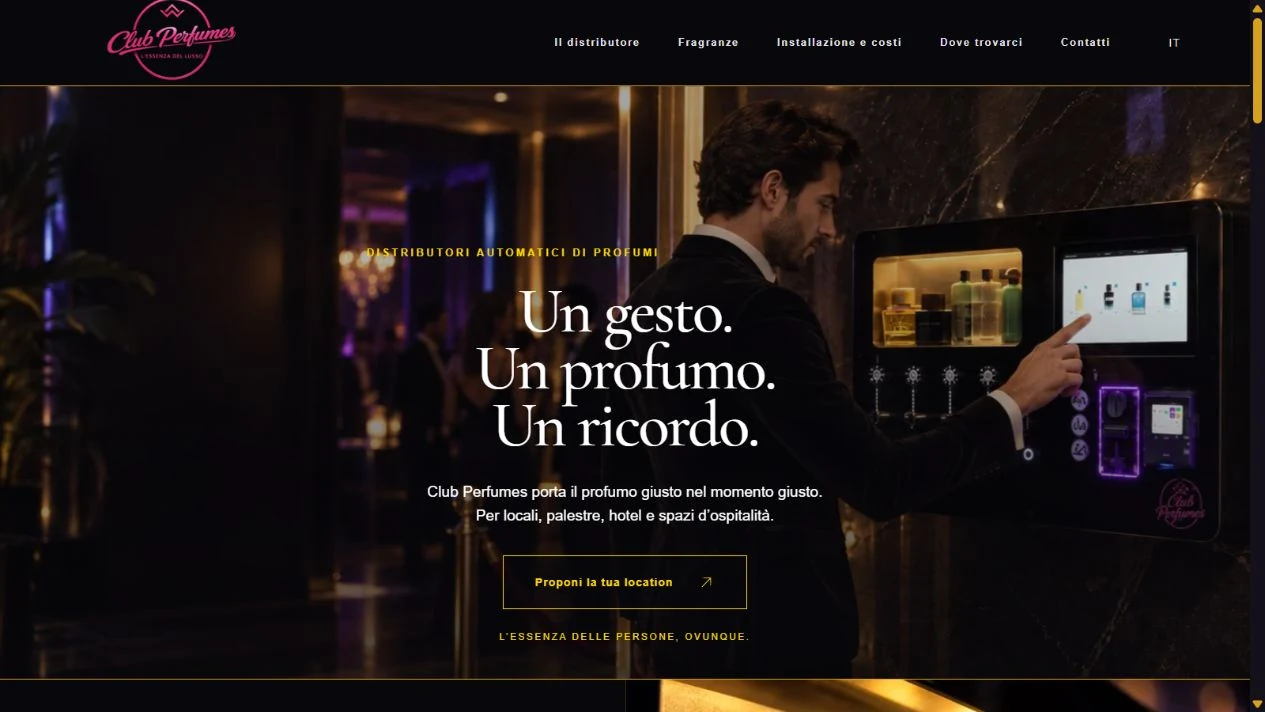
Presenting a service to venues.
A website for a fragrance dispenser service: the offer, catalogue and route to an enquiry. A multilingual presence that makes the service available to explore online.
Visit Club Perfumes ↗APIs, data modelling, mobile applications and experiments: explore the technical projects, their context and the public repositories.

A thesis prototype exploring batch traceability across a supply chain. The problem is to reconstruct relationships between materials, transformations and ownership transfers, and represent how a contamination alert affects other connected batches. This requires modelling both the operations and the links between their inputs and outputs.
The Node.js and Express backend exposes APIs to create, transfer, split, merge and transform batches. Solidity smart contracts use the ERC1155 standard; IPFS stores metadata and attachments, while MongoDB organises the information needed for queries and reconstruction of a batch's history.
Contamination management explores the relationship graph using breadth-first traversal. The project distinguishes contamination status from a batch's lifecycle: consuming a quantity and flagging it as contaminated are different operations, represented through separate rules and data.
The repository documents a local Ethereum environment with Ganache, configuration, endpoints and test scenarios. It is a research and development project whose code makes modelling and integration decisions open to inspection. Operational use would require a dedicated review of requirements and system management.
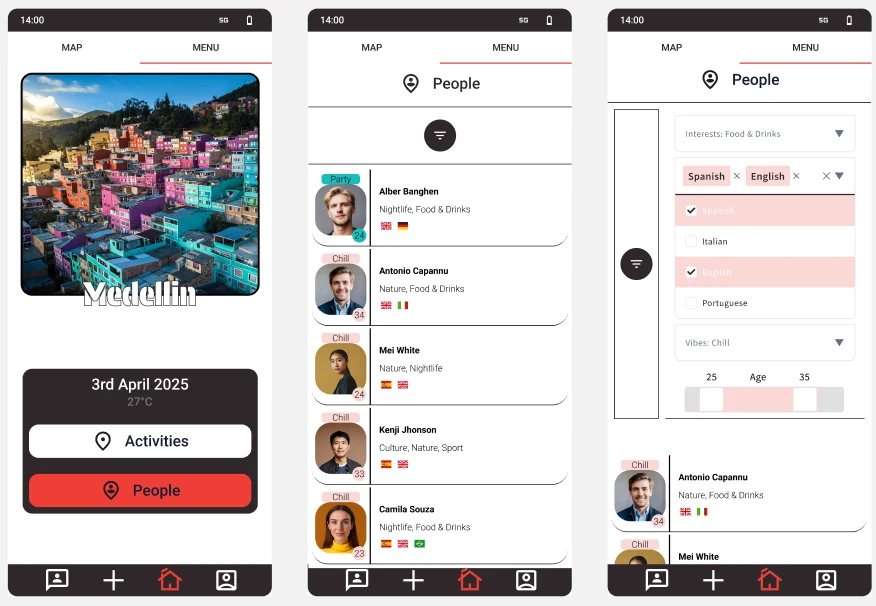
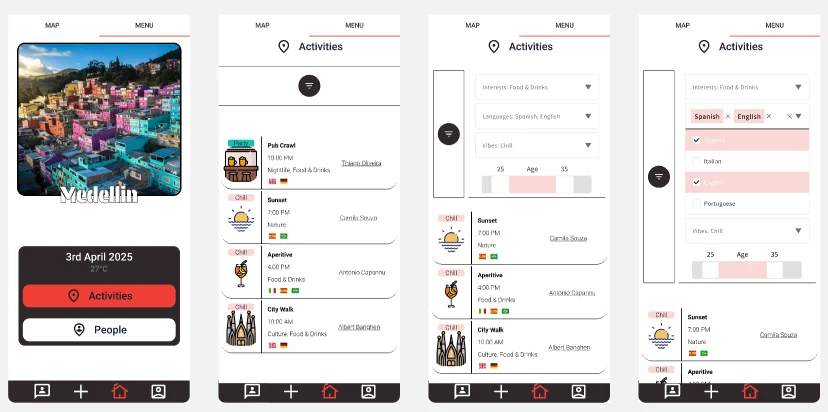
An Android prototype developed independently for a university Mobile Application Development exam. Roamly explores a need shared by international students, travellers and digital nomads: discovering local people and events through common interests, using a map as an entry point to the experience.
The app is written in Kotlin and integrates Mapbox for geographical visualisation. Supabase provides authentication, database and storage services. The project connects the mobile interface, the user's identity and data supplied by an external backend, bringing several parts of an application together.
The screen design is documented through Figma materials and images of the people, activities and map flows. The repository includes Android source code, Gradle dependencies and a report: useful material for examining the app's structure and its integration choices.
The README explicitly identifies Roamly as a work-in-progress university prototype. Additional social features, localisation and interface improvements are described as future work. The repository allows visitors to inspect the documented functionality and the development still planned.
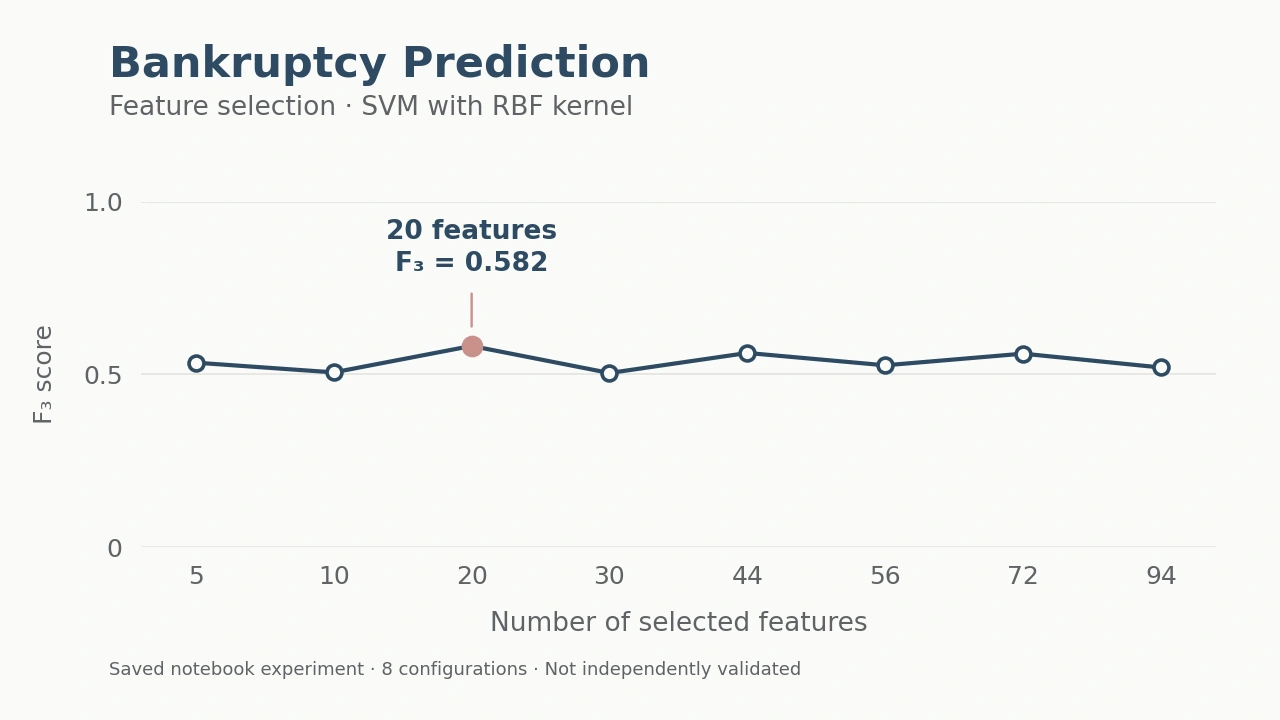
An exploratory Python notebook for classifying company data in relation to bankruptcy. It addresses a machine learning problem: comparing different approaches and observing how results change when the input features and decision thresholds are modified. The focus is the experimental workflow rather than a ready-to-use business application.
The project uses Random Forest to study feature importance and compares Random Forest, Support Vector Machines and neural networks. Its code includes data preparation, hyperparameter searches and prediction analysis using tools from the Python and scikit-learn ecosystem.
Part of the experiment concerns the F3-score, which gives recall more weight than precision. The notebook explores classification thresholds and different neural architectures, also examining overfitting: a model can fit the observed data without generalising adequately to new examples.
The public notebook makes the experimental process available for inspection. This is an academic analysis and comparison project, with observations specific to that experiment. Assessing performance on new company data would require a dedicated evaluation protocol and a review of the intended use.

A university web project developed in Almería with an international team during Erasmus, using a butcher's shop in Madrid as its case. The work covers a product catalogue, shopping cart and Stripe integration with HTML, CSS and JavaScript. The repository presents the educational project and source code, focusing on the purchase journey and content organisation.
A website for a fragrance dispenser service: the offer, catalogue and route to an enquiry. A multilingual presence that makes the service available to explore online.
Visit Club Perfumes ↗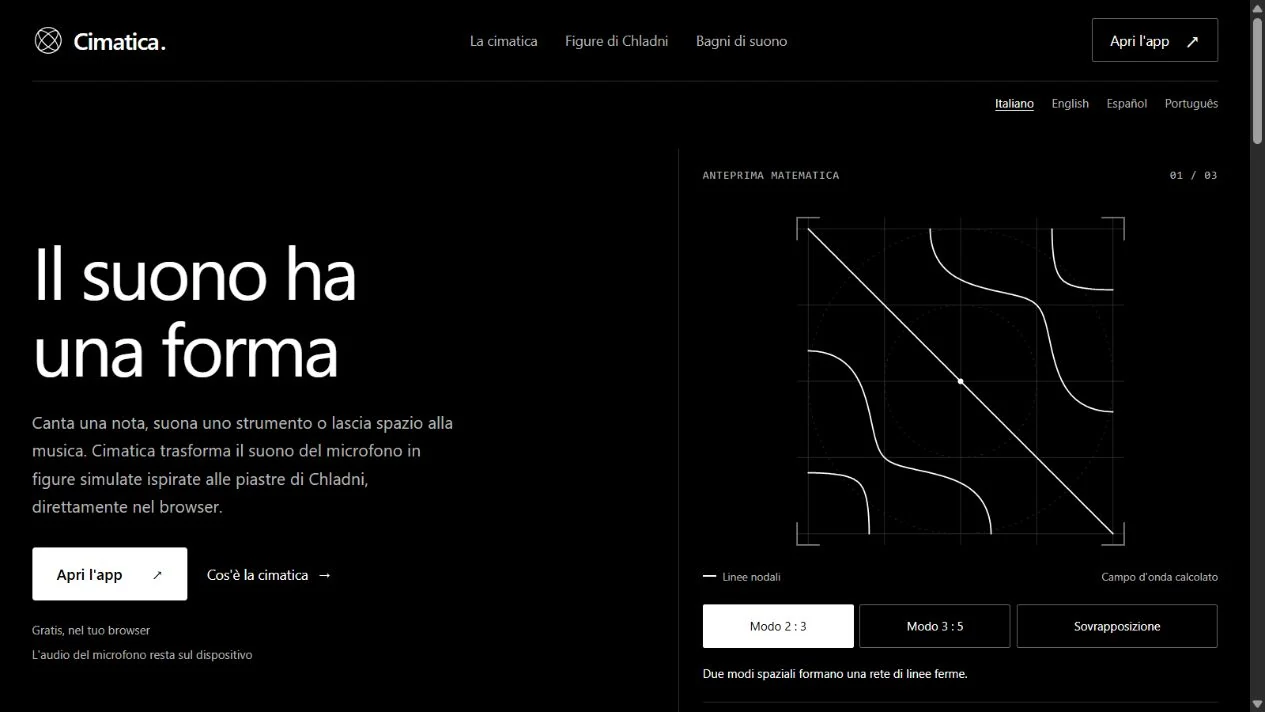
An interactive experience about sound visualisation and Chladni patterns. The website introduces the app and guides visitors from explanatory content to the browser experience.
Explore Cimatica ↗Services used · Who built these projects · Want a similar project? Contact me